
What grassroots football costs a family
Cost is one of the first things a parent needs to know, and the honest answer is that you have to ask the club itself. There is no national price for youth club football. The useful question is what this club charges, what that covers and what can be added later.
What can be explained is the shape of it: which costs may appear, which ones arrive at the start of a season, what subs can cover, and what to ask if the total is more than you can manage. England Football's cost of living hub (opens in a new tab) covers the same ground for clubs and leagues rather than for families.
Club, league and provider charges vary and change between seasons. Nothing on this page is a national price.
Information checked on
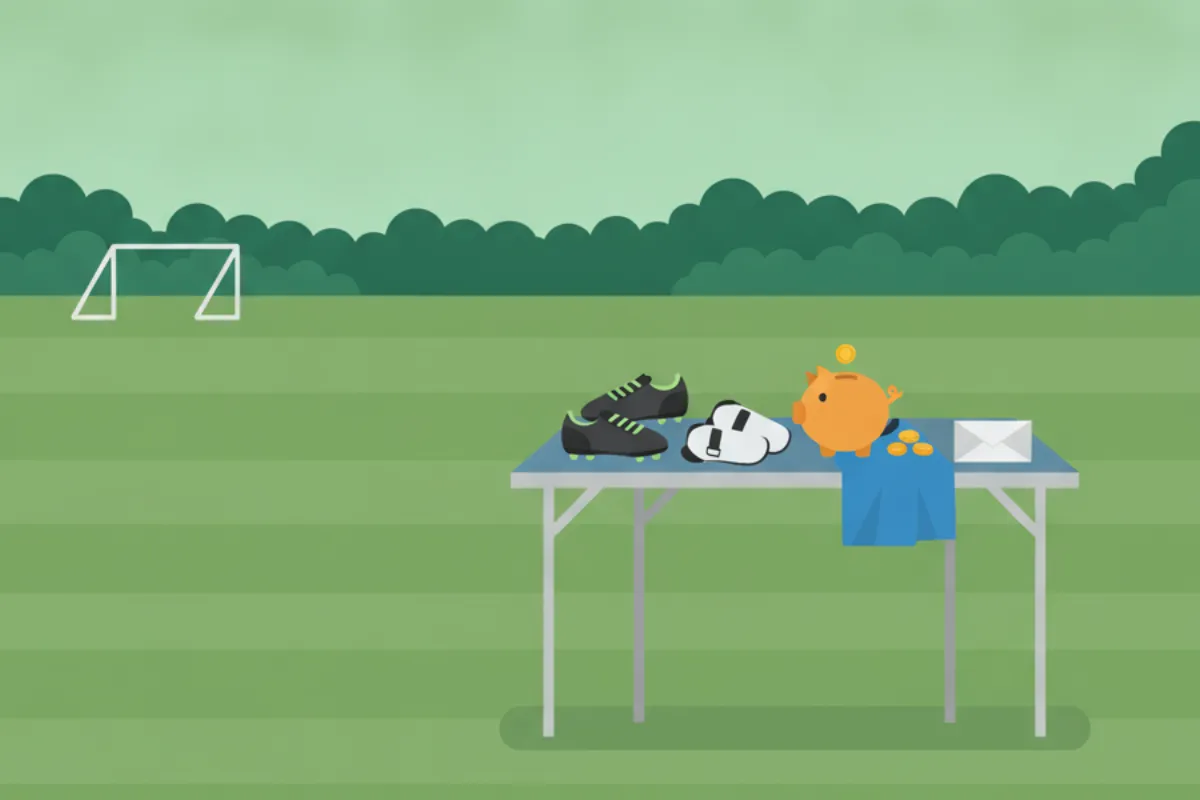
The costs, and when they arrive
- Subs. The recurring club payment for playing. A club may collect it monthly, termly or annually; ask how often it is paid and when the first payment is due.
- A joining or registration fee. Some clubs charge a one-off amount at the start of the season on top of subs, while others include it.
- Match kit. Shirt, shorts and socks. Some clubs include it, some sell it and some lend it. Ask how your club handles it before the season starts.
- Training kit. It may be expected, optional or not used at all. Ask before a group order goes in.
- Boots and shin pads. Shin pads are compulsory under Law 4 of the Laws of the Game (opens in a new tab). Check which footwear is permitted on the surfaces your child trains and plays on before buying.
- Goalkeeper gloves. If that is the position, they are another item to budget for and replace when needed.
- Tournament entry. This may sit outside normal subs. Ask whether the club or team pays it, whether families are asked to contribute and whether taking part is optional.
- Travel. Fuel, parking or public transport for away fixtures can become part of the season cost.
- Holiday camps and extra sessions. These may be included, subsidised or charged separately depending on the club or provider. Ask before booking.
What subs can be paying for
Clubs structure their finances differently. At many grassroots clubs, subscriptions help meet the costs of putting training and matches on through the season.
- Pitch or training venue hire, floodlights and other facility costs.
- Match officials. Appointed referees are paid according to the competition's fees tariff where the club or team is responsible for that payment, as set out in the FA's Standard Code of Rules for youth competitions (opens in a new tab).
- League or competition entry and County FA affiliation costs, where applicable.
- Insurance. The Standard Code requires clubs in these youth competitions to hold at least ten million pounds of public liability cover and personal accident cover for registered players at the minimum level set by the sanctioning authority.
- Coach education, safeguarding and first aid courses, and DBS administration, where the club pays or subsidises them.
- Balls, bibs, cones, goals, nets, first aid kits and other equipment that has to be bought, maintained or replaced.
The mix is different from club to club, which is why the headline subs figure only makes sense once you know what it includes.
Seven questions to ask before you commit
Ask these at the first session rather than after the first invoice.
- What are the subs, how often are they paid, and when does the first payment fall due?
- Is there a separate joining or registration fee?
- Is match kit included, bought or borrowed, and how long is it expected to last?
- Is training kit expected, or optional?
- What, if anything, is charged separately during the season: tournaments, cup entries, presentation evenings or extra sessions?
- Do subs continue through the summer, or stop at the end of the season?
- If a payment is difficult one month, who should we speak to confidentially?
If the cost is a problem
Say so early. Ask the club who handles payment plans or hardship requests confidentially; that may be the treasurer, secretary or another named contact.
- Ask the club first. Ask whether payments can be spread across the season, and whether the club has a hardship fund. England Football points clubs towards guidance on setting one up (opens in a new tab), and a fund can cover some or all of the cost of taking part.
- Ask about kit before buying new. Ask whether the club has a kit bank, second-hand kit or a pass-on scheme.
- Free holiday provision. The government's Holiday Activities and Food (HAF) programme (opens in a new tab) funds free holiday places for eligible school-age children. From September 2026, HAF remains tied to the targeted free-school-meal criteria rather than the wider group newly entitled to free school meals. Councils can also use some of their HAF funding for other children they believe would benefit. Check your council's current HAF offer and eligibility before booking.
- Other ways to play. England Football runs Wildcats (opens in a new tab) and Squad Girls (opens in a new tab) for girls, and Comets (opens in a new tab) for disabled children. These are local sessions rather than a national club-subscription price, so check what the provider near you charges.
- School and community sessions. Football at school, in a park or at a community centre may be free or low cost. A club subscription is not the only way to play.
Keeping the cost down over a season
- Compare boots before the season starts, and buy for the surface your child actually plays on week to week.
- Check the club's kit rules before buying anything. If specific socks, shorts or training wear are expected, it is better to know before you spend.
- Share lifts to away fixtures where that works for the families involved. Agree arrangements early rather than the night before.
- Ask before you commit whether a tournament, camp or extra session is optional and whether there is a separate charge.
- If a club asks for money for something new mid-season, ask what it covers and whether it is compulsory.
Before you join
Cost is one of several things worth checking before signing up. Our guides on joining a club, trials and football camps cover the rest, and England Football's find football tool (opens in a new tab) shows what is running near you.
Common questions
How much are subs for a youth football team?
It depends entirely on the club. Subs may contribute to venue hire, match officials, league or competition fees, affiliation, insurance, equipment and other running costs, but clubs package those costs differently. Ask the club directly what the figure covers and how often it is due.
Do I have to pay for the club kit?
That is a club decision. Some include it, some sell it and some lend it. Ask before the season starts so you know whether to budget for it.
Is grassroots football ever free?
Yes. Some football is free or subsidised through schools, community programmes and schemes such as HAF for eligible children. Club charges vary, so ask the club rather than assuming there is a national fee.
What if we cannot afford subs this month?
Tell the club early and ask about a payment plan or hardship fund. Ask who handles those conversations confidentially; that may be the treasurer, secretary or another named contact.
Are tournaments and camps included in subs?
Sometimes. Clubs package these costs differently. Ask what your normal subs include and what is charged separately before agreeing to an event or camp.